
How a FORTIFIED Roof Is Built
Real photos from coastal Carolina roofs, step by step: what changes from a standard re-roof, and what a FORTIFIED Evaluator documents along the way.
See the stepsTear-off and deck inspection
The old roof covering comes off and the roof deck is exposed. A FORTIFIED Roof starts with a sound, well-attached deck, so the sheathing is inspected before anything new goes on.
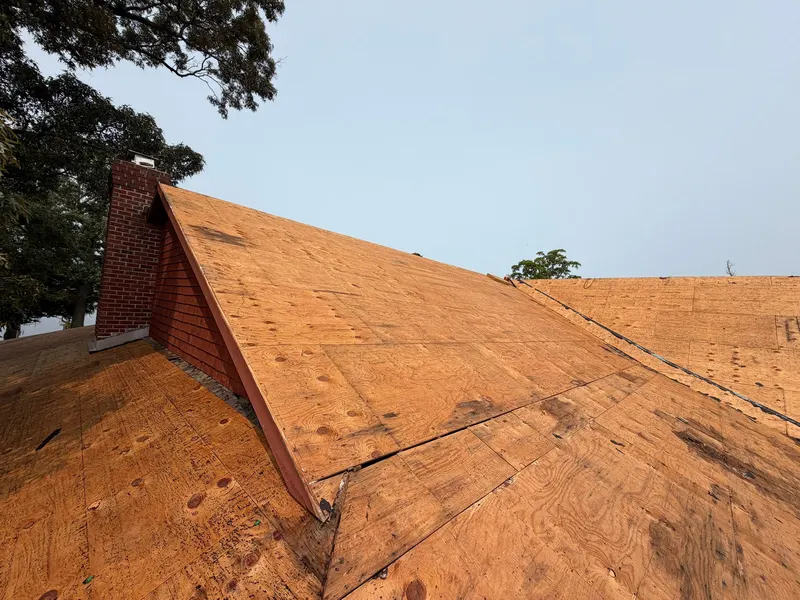
The old roofing is stripped back to the deck. 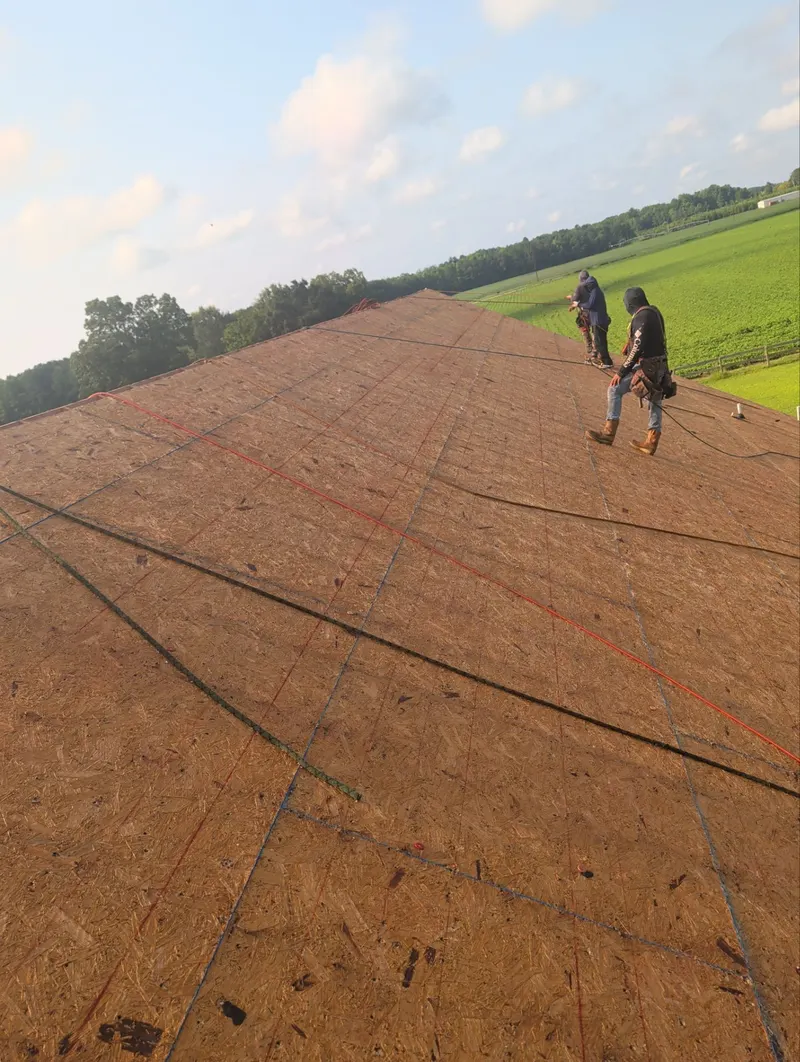
Crews mark the deck for fastening. Replace weak decking
Damaged or loose sheathing is replaced so every panel sits tight to the framing.
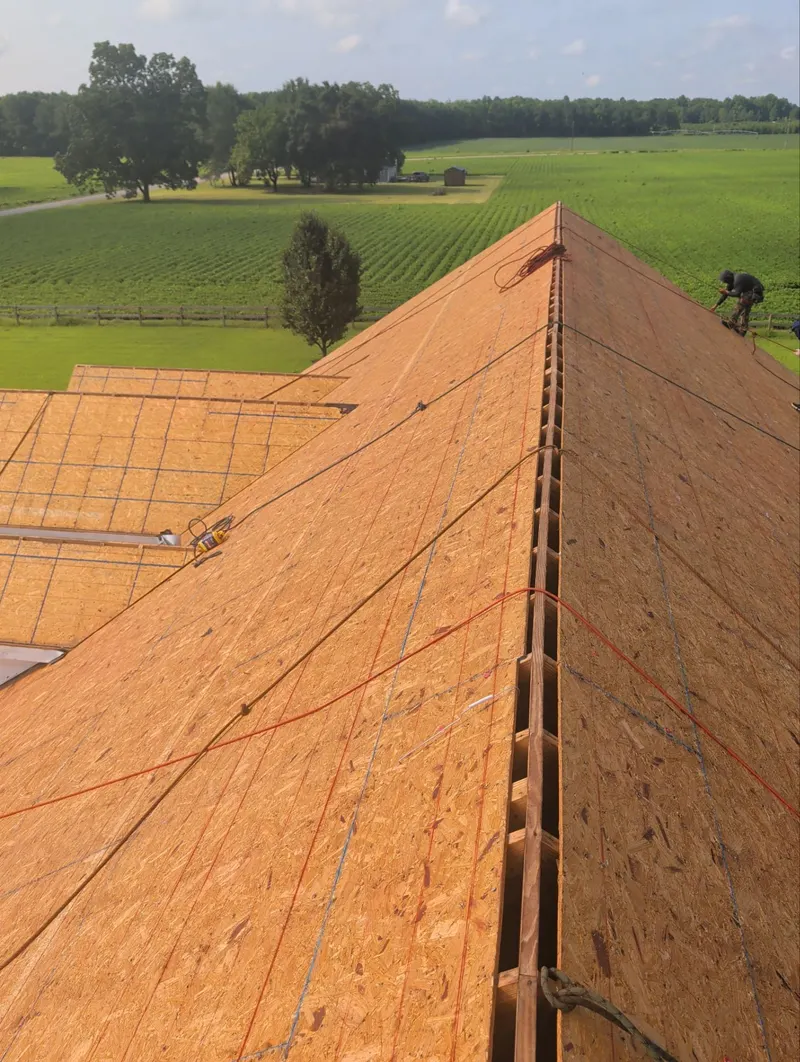
New decking goes in where the old panels are not sound. Attach the deck with ring-shank nails
FORTIFIED calls for ring-shank nails in an enhanced pattern instead of smooth nails. Ring-shank nails nearly double the roof’s resistance to wind forces, according to NCIUA, and they are what keeps the deck on the house when the wind pulls.
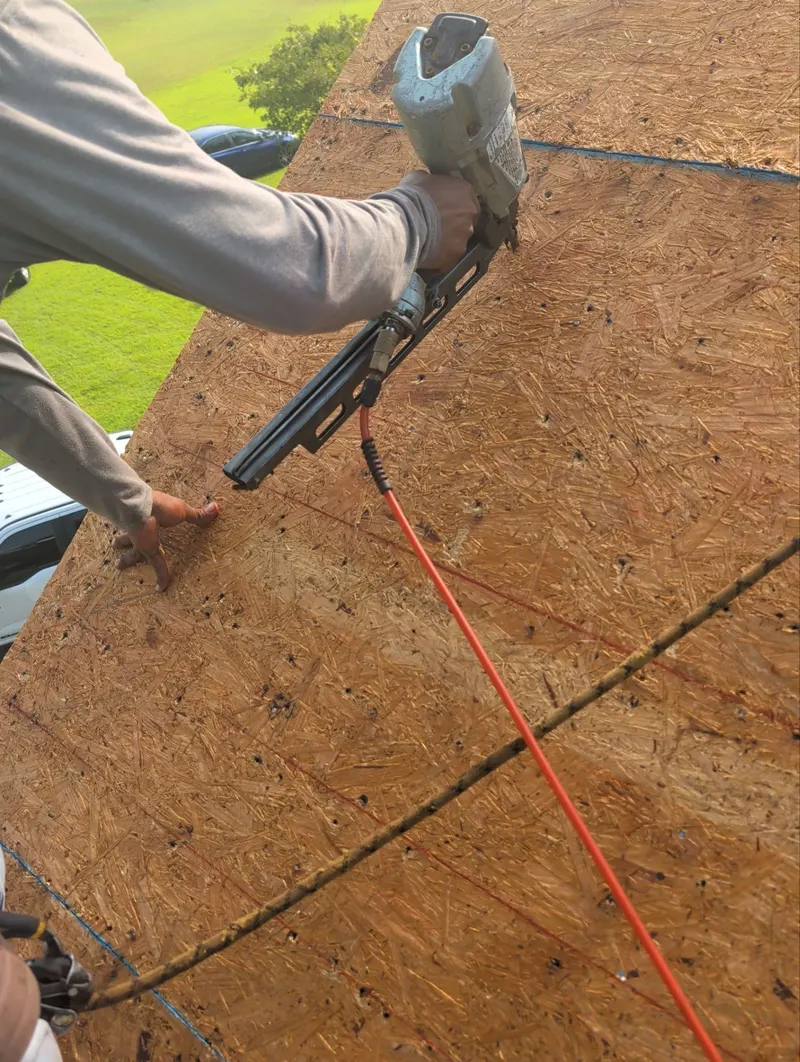
Fastening the deck on the marked pattern. 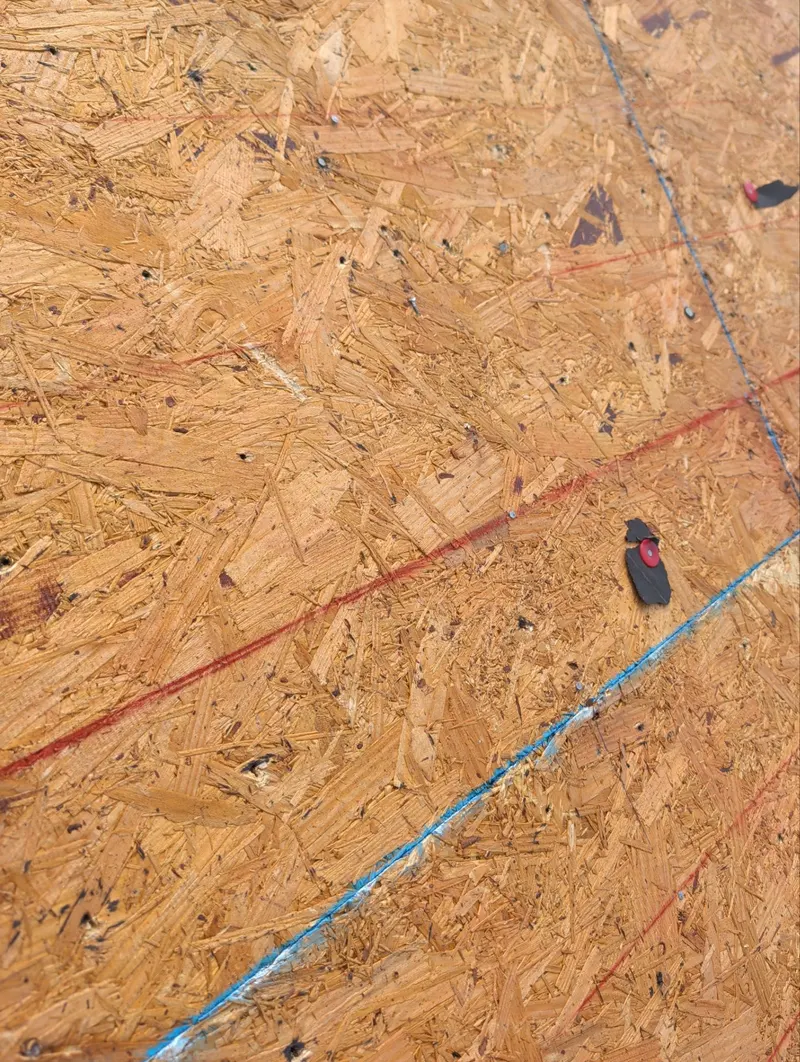
A close look at the fastener pattern. Seal the roof deck
If wind tears off the shingles, bare seams in the deck let rain into the house. FORTIFIED requires a sealed roof deck, so water stays out even when the roof covering is lost. Here, tape covers every seam.
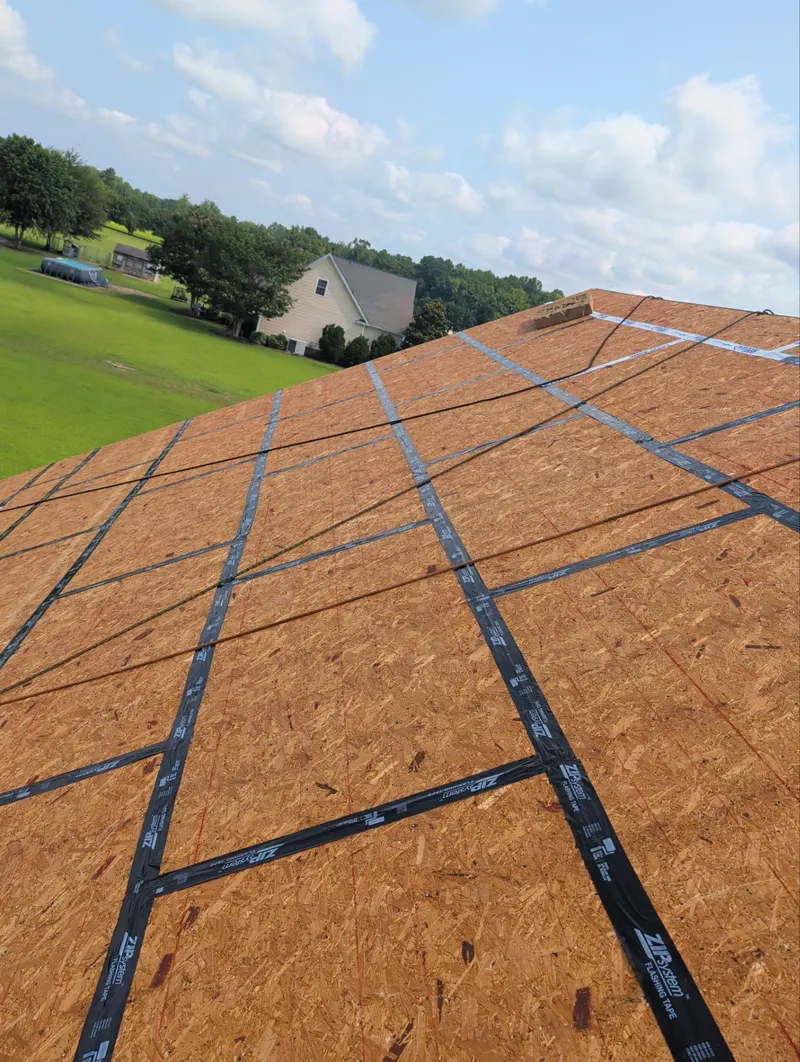
Every seam in the deck is taped. 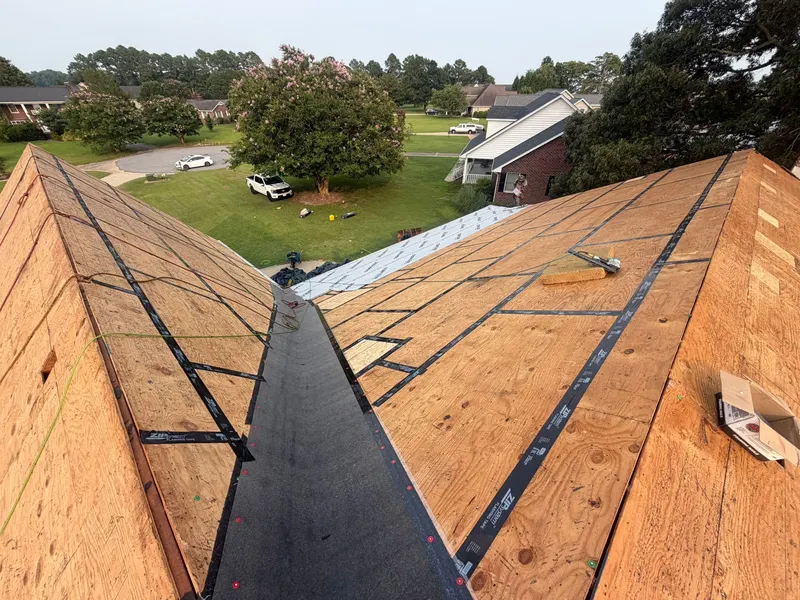
Sealed seams run across each slope and through the valleys. 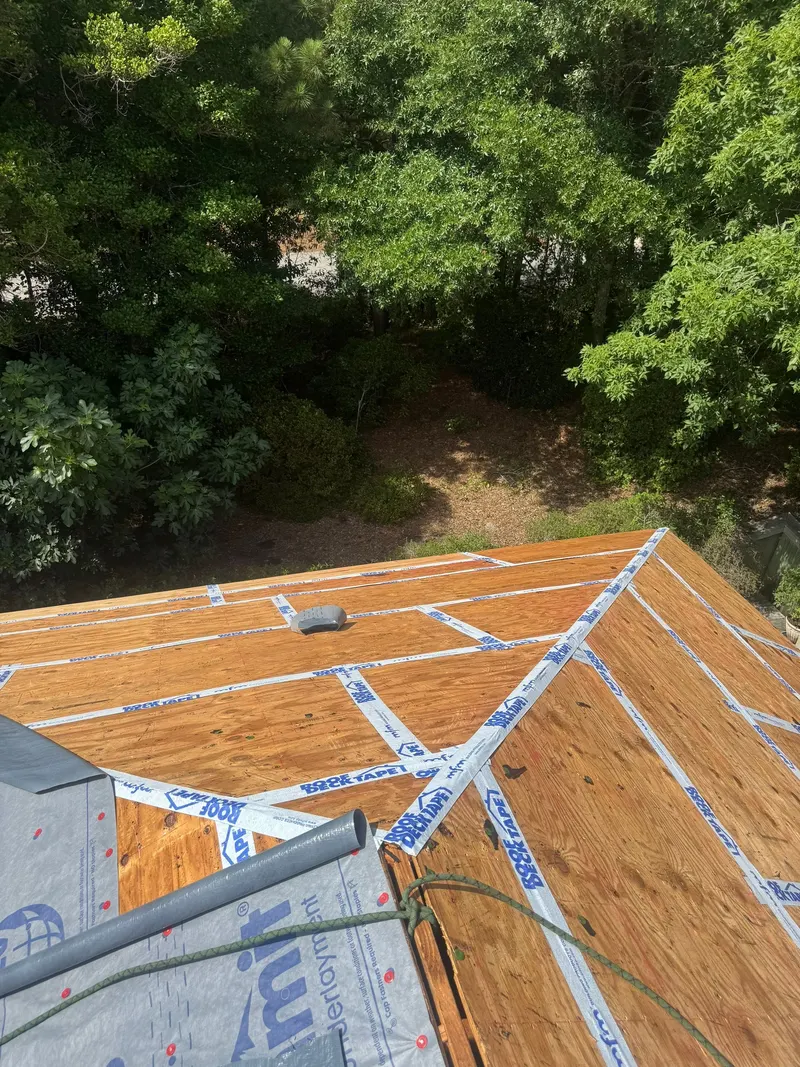
Seam tape goes on first, then the underlayment. Strengthen the edges
Roof damage often starts when wind gets under an edge. FORTIFIED calls for a wider drip edge and a fully adhered starter strip, which work together to lock the edge down.
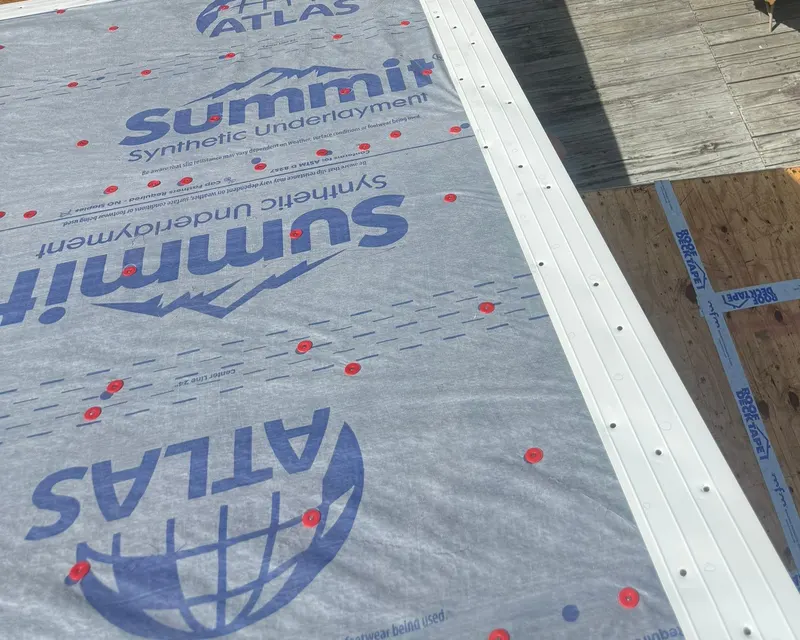
Metal edge goes on at the eaves and rakes. Add the underlayment
Underlayment goes over the sealed deck as another layer under the shingles.
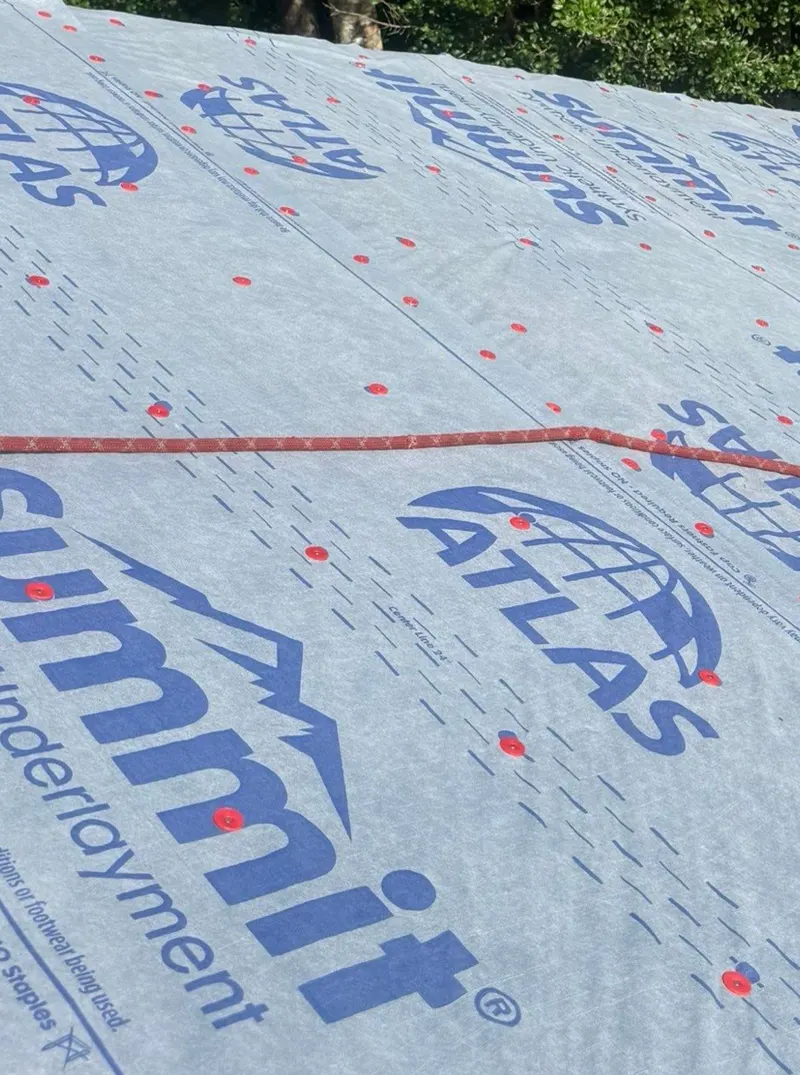
Synthetic underlayment over the deck. Install the roof covering
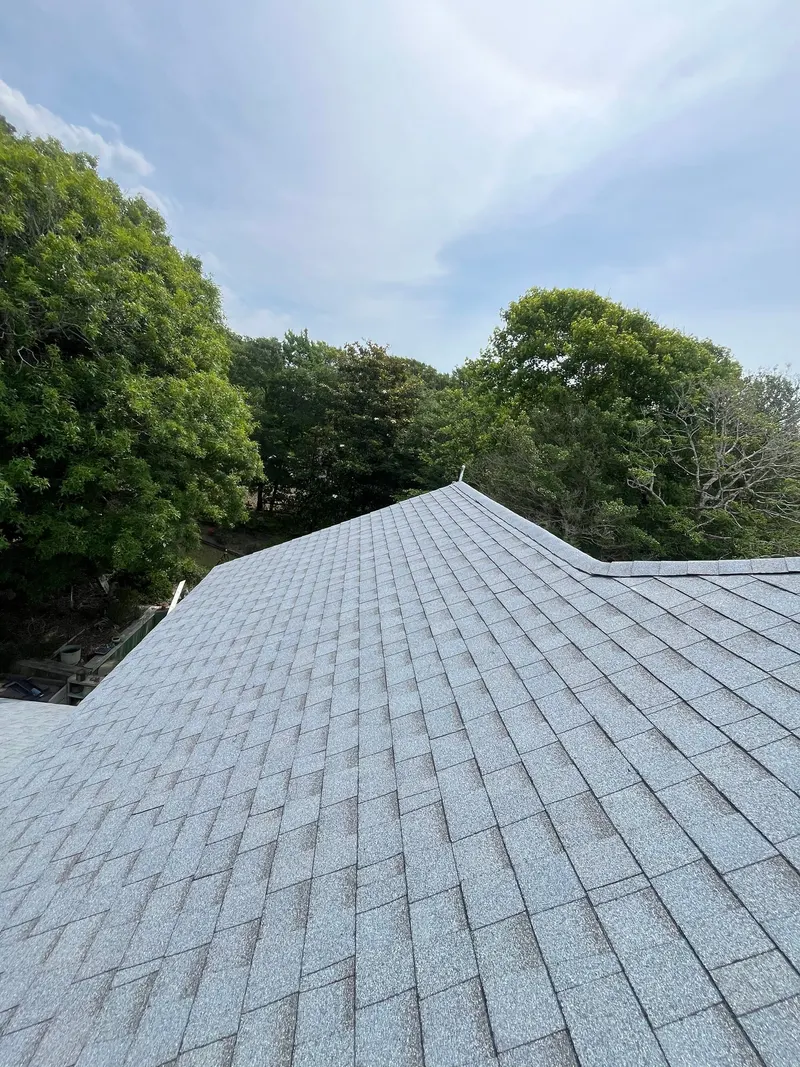
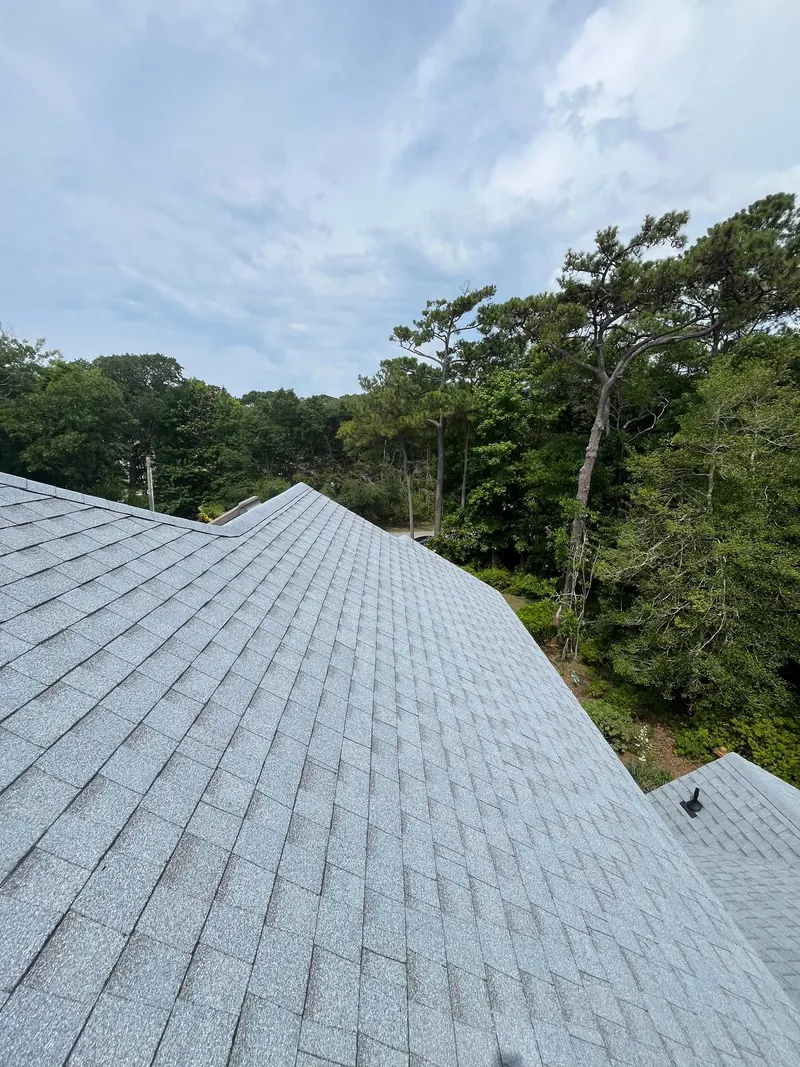
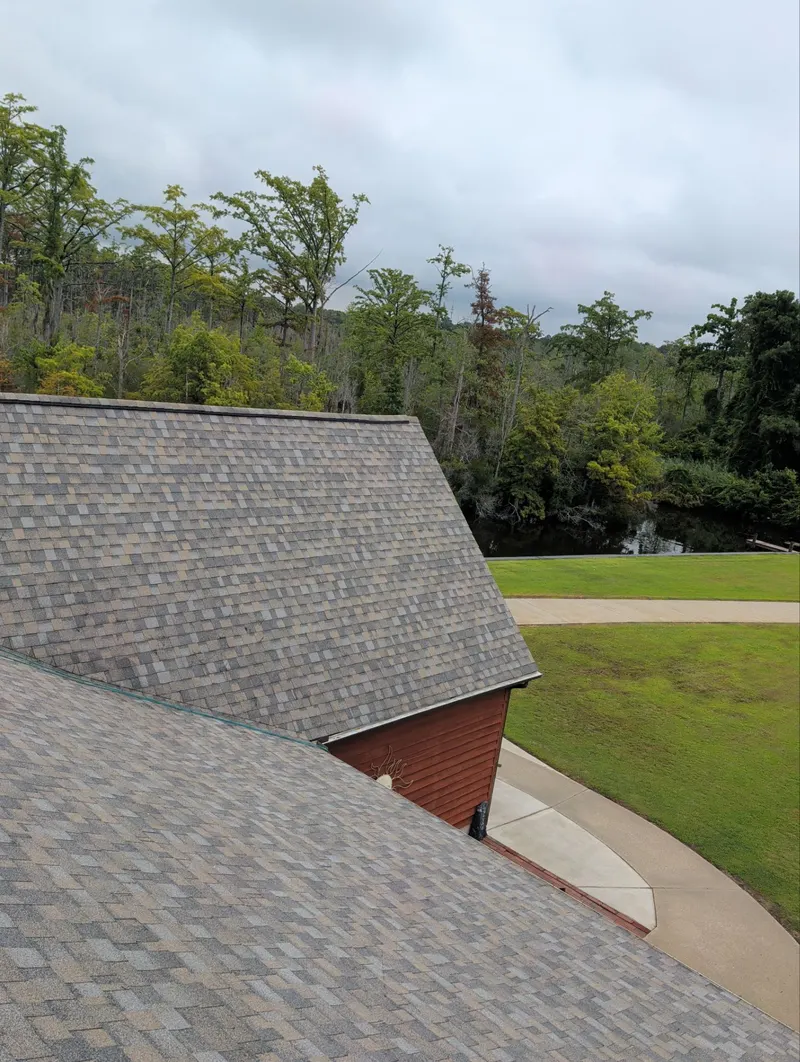
The shingles are fastened over the sealed deck and underlayment, following the manufacturer’s instructions and the FORTIFIED requirements.
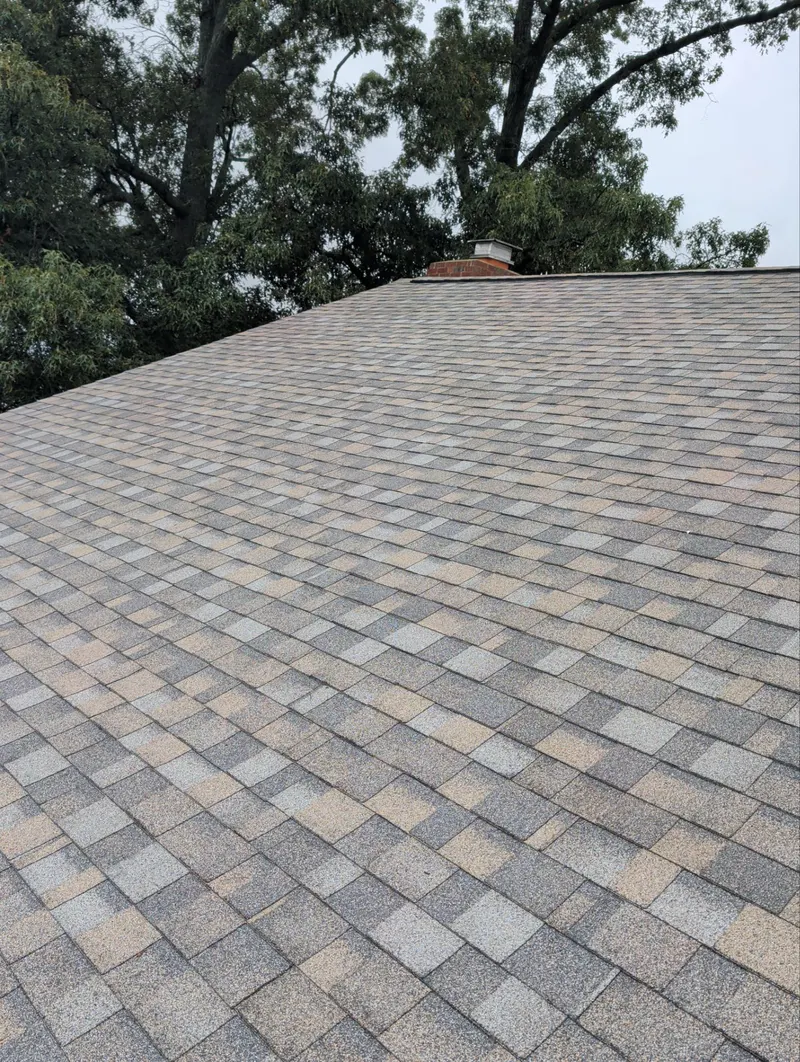
New shingles over the sealed deck. Finish the details
Ridge vents, box vents and the flashing around chimneys and other penetrations are installed and sealed so water sheds away from them.
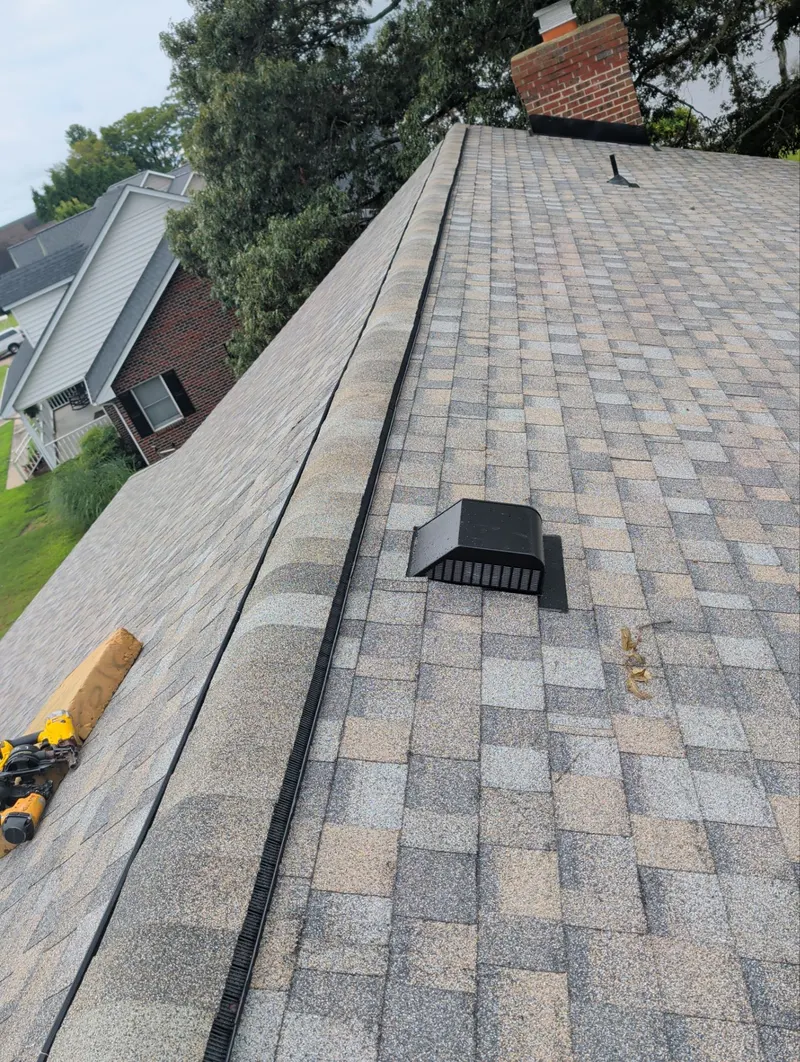
Ridge and box vents finished into the shingles. 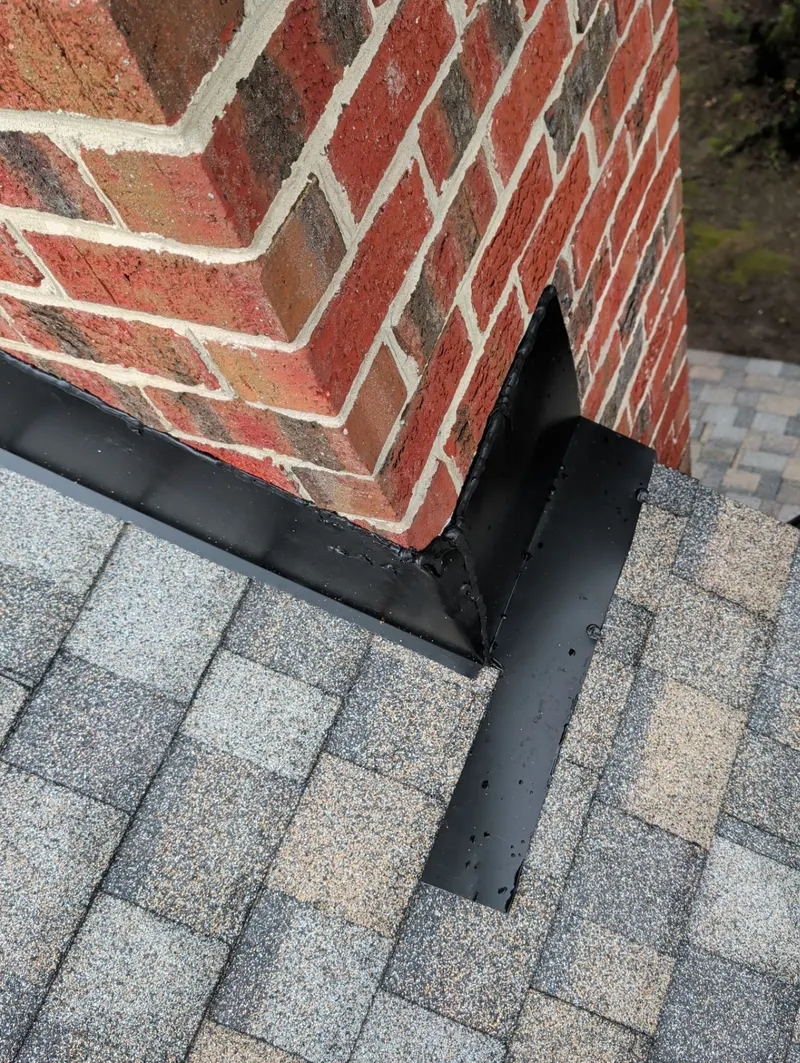
Flashing at a chimney. Document and earn the designation
Throughout the job an independent FORTIFIED Evaluator documents key stages and submits the evidence to IBHS. When the standard is met, IBHS issues a designation valid for five years.
Source: IBHS, FORTIFIED Roof


Why the photos matter
A FORTIFIED designation depends on evidence. The evaluator visits at key points, and the homeowner and contractor supply documentation of the rest. Photos of the nailing, the sealed deck and the edge details are exactly what IBHS reviews before it issues the designation. Roof designations last five years, and your insurer may use the certificate to apply a credit. See what that credit is worth with the insurance savings calculator.
Sources: IBHS, FORTIFIED Roof · NCIUA, Strengthen Your Coastal Roof FAQ.
FORTIFIED Roof process questions
How is a FORTIFIED Roof different from a normal roof?
A FORTIFIED Roof is built to a specific IBHS standard designed after decades of research. It has stronger edges (a wider drip edge and a fully adhered starter strip), a sealed roof deck so water stays out if the roof covering is lost, and ring-shank nails installed in an enhanced pattern instead of smooth nails. Ring-shank nails nearly double the roof deck’s resistance to wind forces, according to NCIUA.
Who checks that the work meets the standard?
An independent FORTIFIED Evaluator documents key stages of construction and submits the evidence to IBHS. If the standard is met, IBHS issues the designation certificate. The evaluator is on site for limited periods and relies on the homeowner and contractor to supply some of the photos and paperwork, which is why this page shows the stages crews photograph.
How long does a FORTIFIED designation last?
IBHS designations are valid for five years. At the end of the term a redesignation inspection is required to keep the designation, and many insurers require a current designation to keep the credit.
Who can install a FORTIFIED Roof?
The work should be done by a roofing contractor who knows the standard. In NCIUA’s grant programs, only IBHS Certified FORTIFIED Roofing Contractors may install the roof, and work starts only after a FORTIFIED Evaluator has been assigned. Ask any contractor for proof of certification.
Does a FORTIFIED Roof make my home hurricane-proof?
No. A FORTIFIED designation strengthens the building systems that are most often damaged in severe weather, but a home with a FORTIFIED Roof can still sustain damage.
Ready for a stronger roof?
Tell us about your home. A coordinator will follow up about your FORTIFIED evaluation, grants and insurance credits.
Get StartedRelated pages
What is FORTIFIED?
The IBHS standard, the Roof, Silver and Gold levels, and what each requires.
OpenInsurance savings calculator
Your NCIUA FORTIFIED credit by territory, policy and level, from the official 2026 tables.
OpenNC and SC roof grants
Who qualifies for the NCIUA grants and SC Safe Home, and how to apply.
Open